Beyond the Race: Sepang, Tun Mahathir’s Vision and Malaysia’s Digital Economy
"What Malaysia’s iconic racing circuit tells us about business ambition, technology and the economics of building for the future."
With Formula 1 fever in the air, the conversation naturally turns to drivers, teams and race strategies. In Malaysia, it also offers an opportunity to revisit the thinking behind Sepang International Circuit and why its story remains relevant to businesses today.
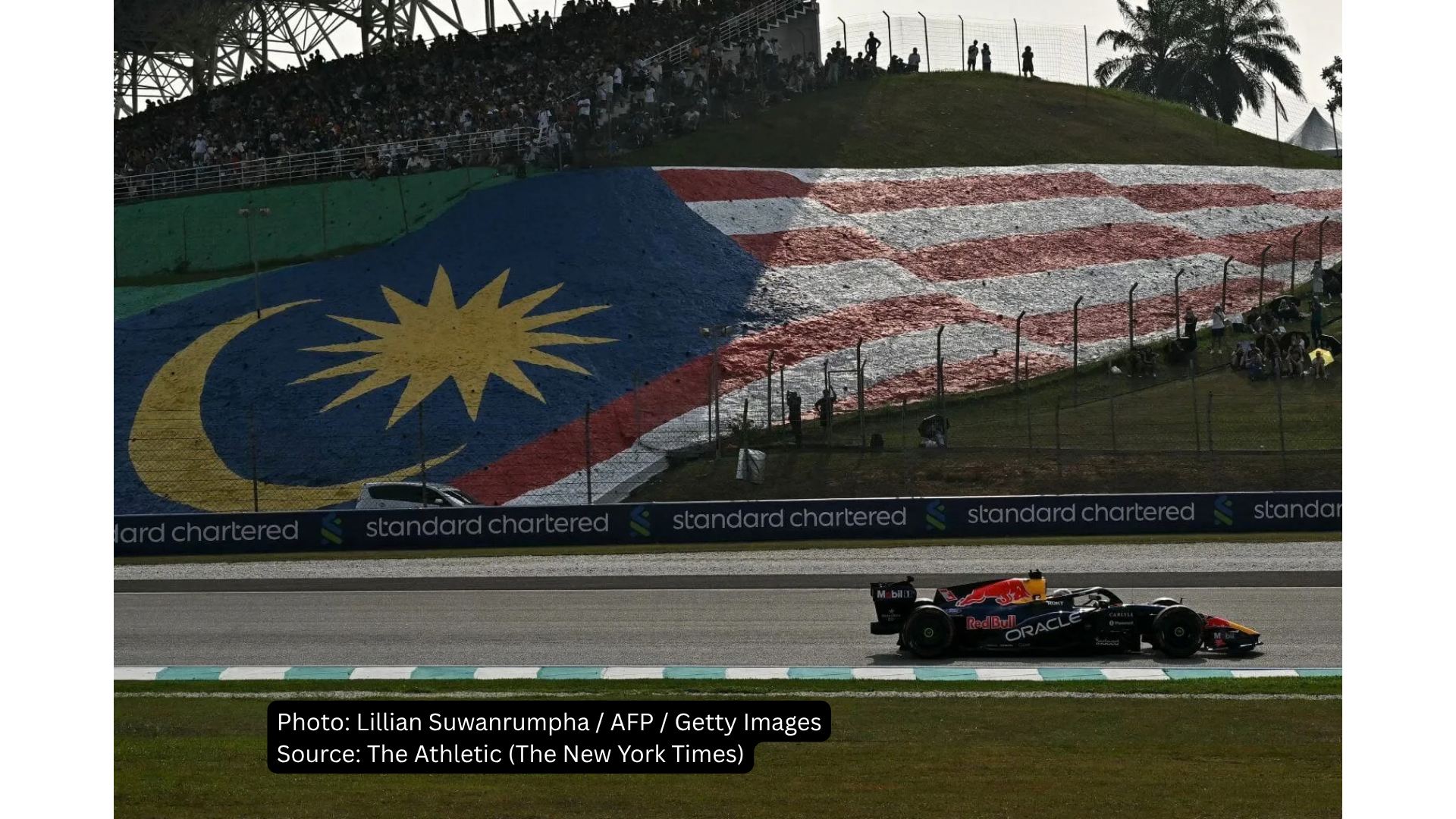
Officially inaugurated on 9 March 1999 by then Prime Minister Tun Dr. Mahathir Mohamad, Sepang was designed by renowned circuit designer Hermann Tilke. Its opening marked an important milestone in Malaysia’s participation in international motorsport.[1]
But the ambition behind Sepang extended beyond hosting a race.
A circuit within a bigger vision
In his speech at the circuit’s opening, Mahathir explicitly connected Sepang to the surrounding development of Kuala Lumpur International Airport, Cyberjaya, Putrajaya and the Multimedia Super Corridor. He also outlined its potential to support automotive research and development, regional motorsport activities and tourism.[2]
These were ambitions expressed at the launch, rather than evidence that every anticipated benefit was eventually achieved. Nevertheless, they reveal the broader thinking behind the project: infrastructure could help Malaysia develop new capabilities and strengthen its international presence.
From a business perspective, this was an attempt to create connections between different economic activities. International transport, sporting events, tourism and technology development could reinforce one another.
Sepang gave that ambition a highly visible stage.
Global attention and the economics behind it
Mahathir’s opening speech positioned Formula 1 as an opportunity to promote Malaysia internationally and attract visitors. He argued that the exposure surrounding the race could provide advertising value for the country and support tourism.[2]
The commercial logic is familiar to businesses. Visibility can introduce a brand to new audiences, create interest and open opportunities. However, turning that attention into lasting value requires a sustainable business model.
Malaysia’s decision in 2017 to end its existing Formula 1 hosting arrangement illustrates that distinction. Contemporary reporting highlighted the government’s unwillingness to continue bearing the annual cost of staging the race.[3]
That decision does not, by itself, establish whether Sepang’s wider economic benefits outweighed its costs. It does demonstrate why the financial case for hosting a particular event must be reviewed over time.
For businesses, the lesson is practical: ambition should be accompanied by clear objectives, measurable outcomes and regular evaluation. A high-profile investment needs more than attention to justify its continuing expenditure.
Formula 1 is also an IT story
Behind the racing spectacle sits a sophisticated use of information technology.
According to Amazon Web Services, each Formula 1 car carries approximately 300 sensors generating more than 1.1 million data points per second. F1 Insights uses data analysis and machine learning to turn racing information into graphics that help audiences understand performance and strategy.[4]
This creates a useful parallel for everyday business operations. Information becomes valuable when it helps people make better decisions.
A retailer might connect sales and inventory data to reduce stock shortages. A service company might track enquiries to understand which ones become paying customers. A growing organisation might integrate its systems to reduce repeated data entry and improve coordination.
These are business applications of the same underlying principle: measure what is happening, interpret the information and act on it.
Technology investment should therefore begin with a concrete operational question. What needs to become faster, clearer or more reliable?
Connecting the vision to Malaysia’s economy today
The digital economy gives this discussion a measurable foundation.
The Department of Statistics Malaysia reported that ICT and e-commerce together contributed 23.4% to Malaysia’s economy in 2024, valued at RM451.3 billion.[5] Although this figure describes 2024 rather than the current year, it demonstrates the substantial economic role of digital activity.
The historical connection is also clear. At Cyberjaya’s official opening in July 1999, Tun Mahathir described the Multimedia Super Corridor as a strategy to move Malaysia’s economy and society into the Information Age. His speech also addressed investment, innovation and the development of knowledge workers.[6]
Sepang and Cyberjaya served different purposes, but the speeches show how both fitted within a broader ambition to strengthen Malaysia’s capabilities and global competitiveness.[2][6]
For businesses operating today, the relevant question is how to translate that spirit of ambition into useful results. Building a platform, adopting software or launching a new service is a starting point. Its continuing value depends on the people, processes and decisions supporting it.
What businesses can take from Sepang
Sepang’s story offers a way to look beyond the excitement of race weekend.
It encourages businesses to think about how investments connect: how infrastructure supports access, how visibility creates opportunities and how technology improves execution. It also reminds us that the economics must remain under review.
Sepang’s story continues beyond the circuit, inviting us to reflect on how today’s ambitions can create opportunities for tomorrow. For businesses, its relevance lies in the care taken to turn an idea into something of lasting value.
“What we begin with vision, we sustain with purpose.”
References
[1] PETRONAS Sepang International Circuit. Overview.
https://www.sepangcircuit.com/explore-overview
[2] Mahathir Mohamad. (1999, March 9). Majlis Perasmian Litar Lumba Sepang [Opening speech]. Transcript hosted on Mahathir.com; source identified as the Prime Minister’s Office.
https://www.mahathir.com/malaysia/speeches/1999/1999-03-09.php
[3] Malay Mail. (2017, September 29). Malaysian GP ‘200pc’ cancelled, says Sepang circuit chief.
[4] Amazon Web Services. F1 Insights powered by AWS.
https://aws.amazon.com/sports/f1/
[5] Department of Statistics Malaysia. Information and Communication Technology Satellite Account 2024.
[6] Prime Minister’s Office of Malaysia. (1999, July 8). The Official Opening of Cyberjaya [Speech by Mahathir Mohamad].
https://www.pmo.gov.my/ucapan/?id=1409&m=p&p=mahathir